Agricultural solar solutions
Saskatchewan farm solar —
cut your power bill by up to 90%
Properly sized for grain bins, irrigation, shops, and barns — the only line left on your SaskPower bill is the fixed connection fee. And if you're incorporated, 30% cash back from CRA on the system cost through the Clean Technology ITC.
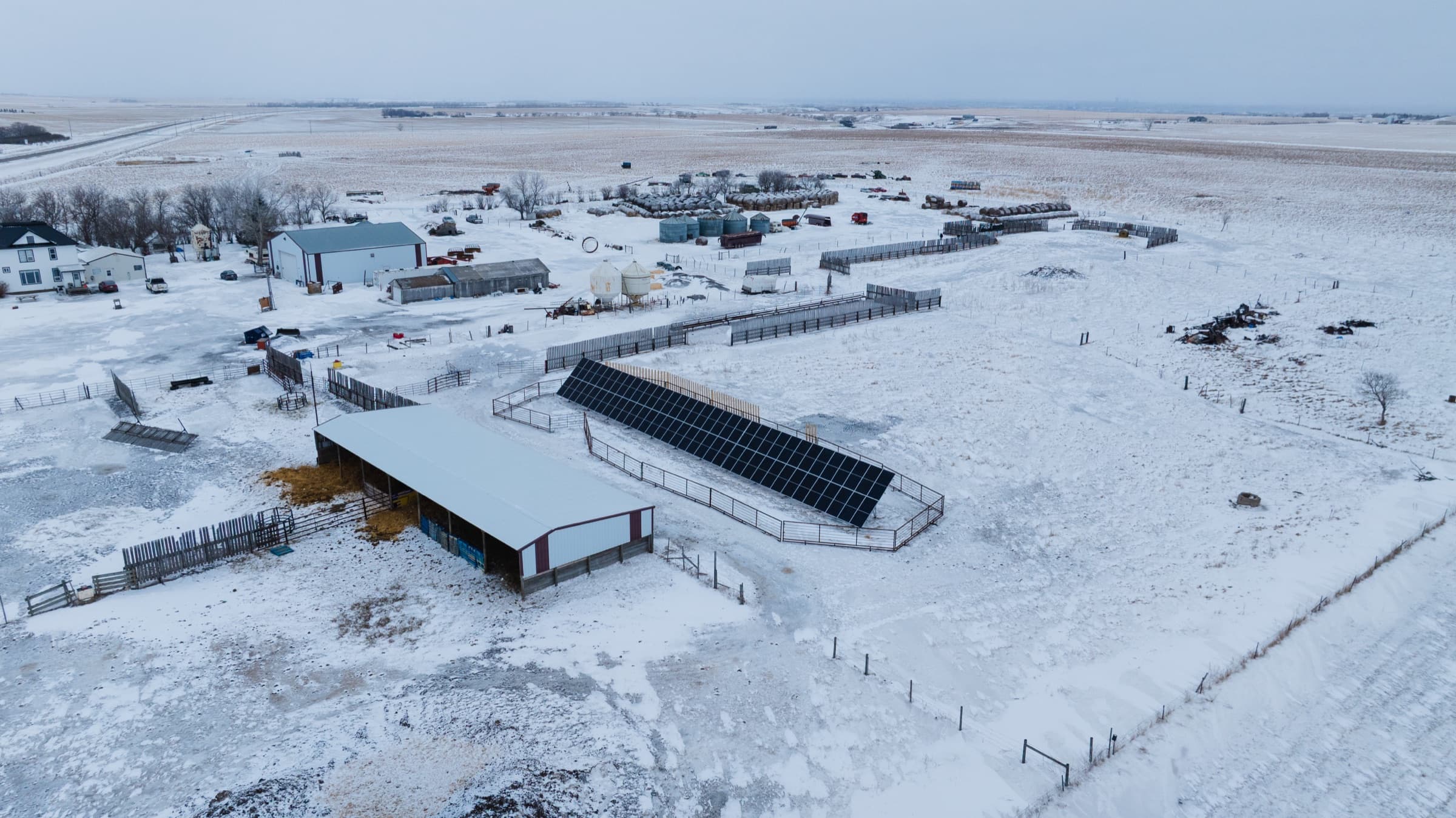
30% cash back from CRA
Federal incentives for incorporated farms
The Clean Technology Investment Tax Credit (CT ITC) is a 30% refundable tax credit on solar equipment. “Refundable” means it's real cash from CRA, not just a tax deduction — if your farm corporation owes less tax than the credit is worth, CRA sends the difference as a cheque. Full rate runs 2026–2029, then phases down.
30% refundable tax credit (CT ITC)
$33,000Real cash from CRA — not just a deduction. 30% of your system cost comes straight back as a refundable credit. If your farm corporation owes less tax than the credit is worth, CRA sends the difference as a cheque. Available for incorporated entities only.
100% CCA write-off (Class 43.2)
$16,500 tax savingsDeduct the full system cost in Year 1 under accelerated Capital Cost Allowance. At a 15% corporate rate, a $110,000 system saves approximately $16,500 in federal tax.
GST/HST recovery
$5,500Recover 100% of the GST paid on your solar system through your regular GST filing. Standard input tax credit for registered businesses.
Example: 50 kW system
Year 1 benefit breakdown
Note for sole proprietors: Unincorporated farms do not qualify for the 30% refundable Clean Technology ITC. You may still benefit from CCA deductions and GST recovery. If you're considering solar at scale, this is a reason worth talking to your accountant about incorporation — the 30% cash back can be significant on a $50K–$100K+ system.
How you know we're from Saskatchewan
We understand what a land location is.
Our families live on farms.
Legal land description
NE-22-25-15-W2
· RangeMeridian
When you give us a quarter-section, we already know which RM you're in, which SaskPower feeder runs to your yard, what your snow load category is, and how the wind picks up across that township. We've installed within 50 km of just about every grid square in the southern two-thirds of this province. You're not explaining where you live — you're booking a site visit.
No legal description handy? “The home quarter, two miles south of town” works too. We'll figure it out.
Measured from live installs
Real production across Saskatchewan
These aren't modelled numbers. Every figure below is SolarEdge-logged kWh/kW/yr from a real Prairie Sun system running today. Find your region — that's what your farm will produce.
Southeast Saskatchewan
Estevan area
Also Weyburn, Yellow Grass, Carlyle, Lampman, Oxbow
kWh per kW per year
Example install
Mackenzie family farm
47 kW combined (bifacial + monofacial) · near Estevan, SK
Highest sun hours in Canada. Father-and-son install at the same site: monofacial array at 1,609 kWh/kW/yr, bifacial array at 1,764 — same weather, +10% from bifacial.
South-central Saskatchewan
Moose Jaw / Regina area
Also Assiniboia, Davidson, Watrous, Lumsden, Pense
kWh per kW per year
Example install
Tilson farm
62.64 kW ground-mount · near Moose Jaw, SK
Three consecutive years of measured production within 1% of each other (93,120 → 94,705 → 94,429 kWh). Saskatchewan solar production is predictable — within ±1% of forecast every year we measured.
Southwest Saskatchewan
Swift Current area
Also Maple Creek, Cabri, Kindersley, Eastend, Shaunavon
kWh per kW per year
Example install
Doug Robertson farm
57.78 kW bifacial ground-mount + battery backup · near Swift Current, SK
83,000 kWh per year — two consecutive years within 1.4% of each other (83,647 → 82,470). Hybrid grid-tied + battery system stays connected to SaskPower for everyday operation and automatically backs up critical loads when the grid goes down. Trusted by a former owner of 11 New Holland dealerships.
Saskatoon area
Saskatoon area
Also Warman, Martensville, Dalmeny, Vanscoy, Allan, Aberdeen
kWh per kW per year
Example install
SaskWater Cory Booster Station
100 kW bifacial ground-mount · near Saskatoon, SK
5+ years of utility-grade production data — 786,789 kWh logged. 19% above the SK provincial average. White rock under the array boosts bifacial back-side gain. Our longest-running commercial bifacial system.
East-central Saskatchewan
Yorkton / Melfort area
Also Melville, Grenfell, Tisdale, Humboldt, Wynyard
kWh per kW per year
Example install
Dandilee Spice
100 kW bifacial ground-mount · in Grenfell, SK
488,640 kWh logged over 3.3 years. 6–10% bifacial gain over equivalent rooftop arrays — snow reflection in winter is a measurable production boost.
Northern Saskatchewan
Prince Albert / Meadow Lake area
Also North Battleford, Nipawin, Shellbrook, La Ronge
kWh per kW per year
Example install
SaskWater Meadow Lake
99.51 kW ground-mount · in Meadow Lake, SK
At 54.1°N latitude — well above where most people think solar still pencils out. Producing 13% above the SK provincial average since Dec 2023.
What this means in plain English
Fewer panels. Same energy. Welcome to Saskatchewan.
Every 1 kW of solar panels on a Saskatchewan farm produces roughly 1,400 kWh of electricity per year — and a bifacial ground-mount in the south of the province pushes that to 1,700+. So a 50 kW system on your farm produces around 70,000–85,000 kWh a year.
Same 50 kW system, different province
Saskatchewan
Same 50 kW system
~70,000 kWh
produced per year
Southern Ontario
Same 50 kW system
~57,500 kWh
produced per year
Coastal BC
Same 50 kW system
~50,000 kWh
produced per year
Saskatchewan is the highest-producing solar region in Canada. Because every panel here generates more energy per year, you need fewer panels to offset the same farm bill than you would anywhere else in the country. Stack bifacial on top of that and the gap widens — your system gets smaller, your install gets cheaper, and your payback gets faster.
What is bifacial?
Bifacial panels are two-sided solar panels. The front face produces power from direct sunlight, just like a standard panel. The back face produces additional power from sunlight that reflects up off the ground underneath the array. More glass surface, more energy.
In Saskatchewan, the bifacial advantage gets stronger in winter. Snow is one of the most reflective surfaces on the planet — sunlight bouncing off a snow-covered field hits the back of every panel in the array. Those short December days end up producing more than you'd expect.
Measured bifacial gain
+6–10%
annual production gain
We've measured 1,764 kWh/kW/yr on a bifacial array in Estevan vs 1,609 on a monofacial array at the same farm — same weather, same site, +10% from bifacial alone. On a 50 kW+ system that compounds into real money every year. Bifacial is now standard on most farm ground-mounts we install.
What solar offsets
Every farm has massive power draws
From grain drying to irrigation to livestock ventilation, modern farm operations consume serious electricity. Solar targets these loads directly.
Grain bins & dryers
Typical draw: 15-50 kW
Aeration fans, grain dryers, and bin monitoring systems run for months during harvest and storage season.
Irrigation pumps
Typical draw: 5-25 kW
Electric irrigation pumps running through the growing season are ideal solar candidates with peak demand matching peak production.
Shops & outbuildings
Typical draw: 5-15 kW
Welding, compressors, lighting, and heating in farm shops add up fast. Solar offsets the steady base load year-round.
Barns & livestock
Typical draw: 3-20 kW
Heated watering bowls running all winter, electric heating in barns without gas service, feed systems, ventilation, and lighting — livestock operations pull power 24/7, 365 days a year.
Yard sites
Typical draw: 10-30 kW
The farmhouse, yard lights, well pump, and all the small loads across your yard site combine into a significant monthly bill.
Installation options
Ground mount vs barn mount
Ground mount
- Optimal south-facing angle for maximum production
- No roof structural concerns or penetrations
- Easy snow clearing and maintenance at ground level
- Scalable: add panels as your operation grows
- No impact on barn roof warranty or insurance
- Can be placed near the heaviest electrical loads
Best for: Best for new installations, large systems (50kW+), and operations where barn roofs are older or not south-facing.
Barn / building mount
- Uses existing structure, no additional land needed
- Lower racking and foundation costs
- Often closer to electrical panel for easier interconnection
- Metal barn roofs make for straightforward mounting
- South-facing AND east-west buildings both work well — east-west splits production between morning and afternoon peaks
- Panels add weather protection to the roof below
- Good option when ground space is limited or needed for equipment
Best for: Best for newer metal-roof barns (south OR east-west facing), smaller systems (under 30kW), and farms with limited open ground.
Built for the prairies
Farm-specific engineering
Saskatchewan farms face some of the most extreme weather in Canada. Every system we design is engineered for your exact location and conditions.
Snow load engineering
2.5 kPa
max snow load rated
Saskatchewan building codes require designs rated for 1.0-2.5 kPa ground snow loads depending on location. Our racking systems are engineered for the specific snow load requirements of your region.
Wind load calculations
210 km/h
wind speed rated
Open prairie exposure means higher wind loads than urban installations. Our Clenergy ground-mount systems are engineered to 210 km/h at 35° tilt with 10-foot pile spacing — well above peak Saskatchewan wind events. Foundation depth tuned to your specific site exposure.
Hail & impact resistance
25 mm
hail impact tested
The most common farm question we get: what about hail? Our panels are tested to withstand 25mm hailstones at terminal velocity (over 100 km/h impact). Tempered front glass plus UV-stabilized racking are built for decades of Saskatchewan sun, wind, and storm cycling.
Extreme cold operation
-40°C
operating temperature
Solar panels actually perform better in cold. Silicon cells produce more voltage at lower temperatures. Our systems are rated and tested for continuous operation at extreme Saskatchewan lows.
Understanding your bill
SaskPower farm rate (E34)
Heads up: tier limits and fixed charges below are per meter. Many farms run multiple meters (yard site, shop, grain bins, secondary residence) — each one gets its own Tier 1 envelope, basic charge, and demand calculation. We'll walk through every meter on your operation during the site visit.
Tier 1
$0.1385
per kWh · first 16,000 kWh/month
16,000 × $0.1385 = $2,216 / month
If your monthly energy bill is at or below $2,216, you're entirely in Tier 1 — and every kWh your panels produce offsets electricity at this highest rate. That's the fastest possible ROI on a farm solar install.
Tier 2
$0.0582
per kWh · everything over 16,000 kWh/month
If your bill runs into Tier 2, you still come out way ahead with solar. Every panel works against your full $2,216 Tier 1 envelope first before any production gets credited at this lower rate — so the high-value Tier 1 savings are locked in no matter what.
Fixed Charges
$48.02
per month basic
Basic monthly charge regardless of usage. Demand charge: first 50 kVA is free, then $15.727 per kVA. Solar does not eliminate these fixed charges but offsets the energy portion of your bill.
Compare system sizes
Savings by system size
Based on Saskatchewan average production of 1,400 kWh per kWp per year at E34 farm rates.
System cost
$107,500
before incentives
Annual production
70,000 kWh
per year
Annual savings
$9,700
per year
Payback period
7-9 years
with incentives
Best for: Full yard + grain bins
Common questions
Farm solar FAQ
Related resources
Solar calculator
Estimate your system size, costs, and savings.
Solar incentives
Federal and provincial tax credits, rebates, and write-offs.
Saskatchewan solar guide
Everything you need to know about going solar in SK.
Farm solar near you
We install across Saskatchewan. See farm + residential solar information for your city:
What farm customers say
“Prairie Sun staff was very informative and considerate from beginning to end! They were a great crew to have, getting our solar system up and running!”
Lynette Audette
Farm customer — Ethelton, SK
Farms across the prairies
Farms running on Prairie Sun
Featured farm installs from Roche Percee to Ethelton — grain, livestock, and family operations producing serious kilowatt-hours.
Estevan area, SK
Mackenzie Family Farms Go Solar Near Estevan
Two Mackenzie family farms near Estevan, Saskatchewan — 47 kW combined ground-mount solar across Duane's main cattle operation (and Mackenzie Meats) plus his son Brad's nearby property.
kWh produced since 2024
kWh per kW / year
Moose Jaw area, SK
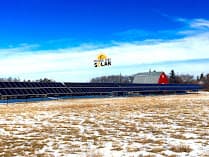
Tilson Farm Solar — 94,000 kWh per Year Near Moose Jaw
Three full years of production within 1% of each other — Richard Tilson's 62.64 kW ground-mount solar system near Moose Jaw produces 94,000 kWh every year, like clockwork.
kWh produced since 2023
kWh per kW / year
Swift Current area, SK
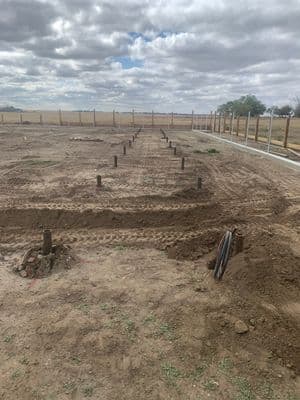
Robertson Farm Solar — 83,000 kWh per Year + Battery Backup Near Swift Current
Doug Robertson's 57.78 kW ground-mount solar system near Swift Current produces 83,000 kWh per year — a hybrid grid-tied install with battery backup that keeps essential loads running during grid outages.
kWh produced since 2023
kWh per kW / year
Ready to start saving?
Get a free farm solar quote
We will review your SaskPower bills, assess your site, and design a system sized to deliver maximum savings for your operation.